When I sold my much loved RC10 - it was simply getting too much of a handful for my ageing 82 year old body, I knew I would still want a similar focal length telescope for imaging smaller deep sky objects, and of course planets. Before the RC10 I had used a Meade ACF which had a good flat field, but unfortunately they had by this time gone out of business! The only sensible alternative which would be light enough to handle was a Celestron Edge HD. I was tempted by the 9.25", but it was very expensive and still quite chunky, so I settled for the 8" version, f10, 2032 mm focal length, which duly arrived on 21st October 2025 courtesy of First Light Optics. It had a Losmandy style dovetail fitted which was too big for both my Observatory and EQ6 'Star Party' mounts, but rather than fit a slimmer dovetail which might have compromised stability I was able to use the strong solid Vixen style dovetail which had been on my RC10. It also had Losmandy bars as part of the structure, but they were flat so I could bolt the Vixen dovetail directly to it. The new buyer didn't need the Vixen dovetail, so I bought a couple of Losmandy clamps and bolted them to the Vixen unit.
Although this arrangement worked quite well, and the extra weight was not a problem I found that when balanced on my Observatory mount the bulky assembly interfered a bit with the mount clamping handles. There was also a Vixen style dovetail available from First Light Optics,but fairly pricey at £32. However I found the identical item on Amazon for half that price, so ordered it.
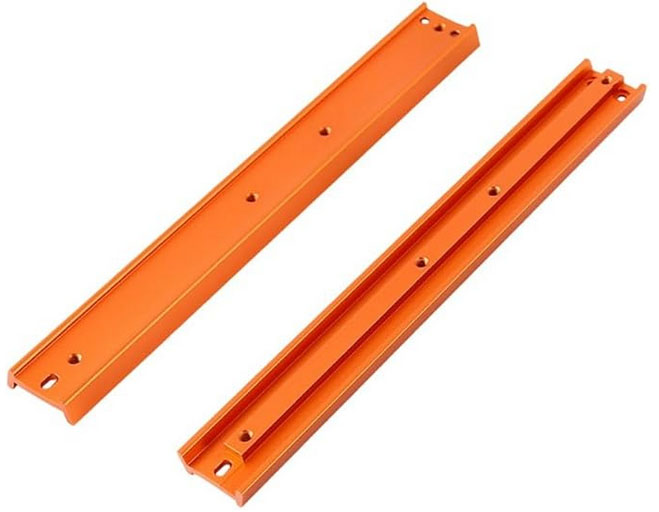
It was a perfect fiit, already predrilled correctly for fixing screws. And despite my earlier misgivings, perfectly stable. So here is the telescope on my Observatory mount with a clear view of the rotator arrangement mentioned below. As before, click on the thumbnail for a larger image. Much lighter and easier to handle than the RC10, and will of course happily ride on my EQ6 mount at Star Parties.
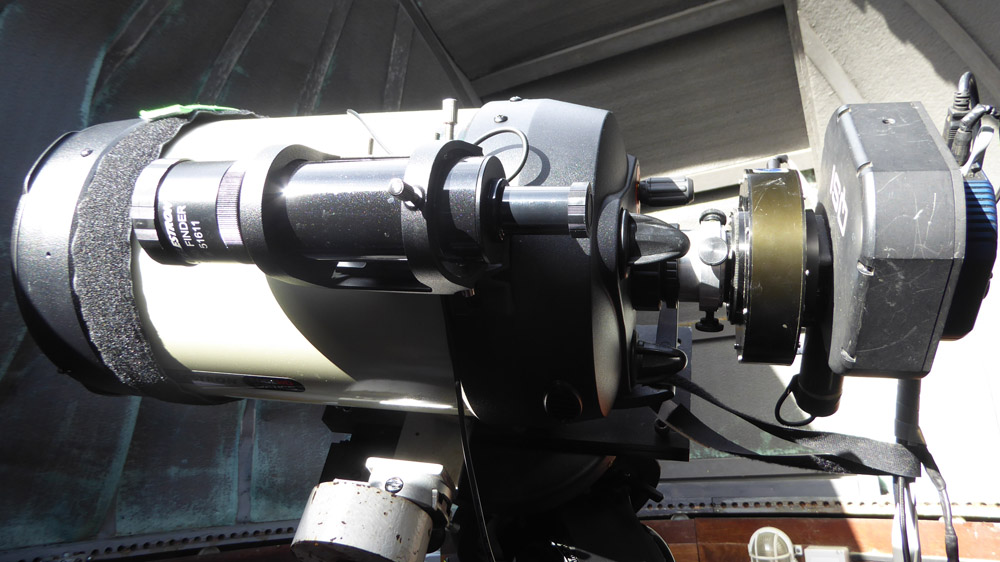
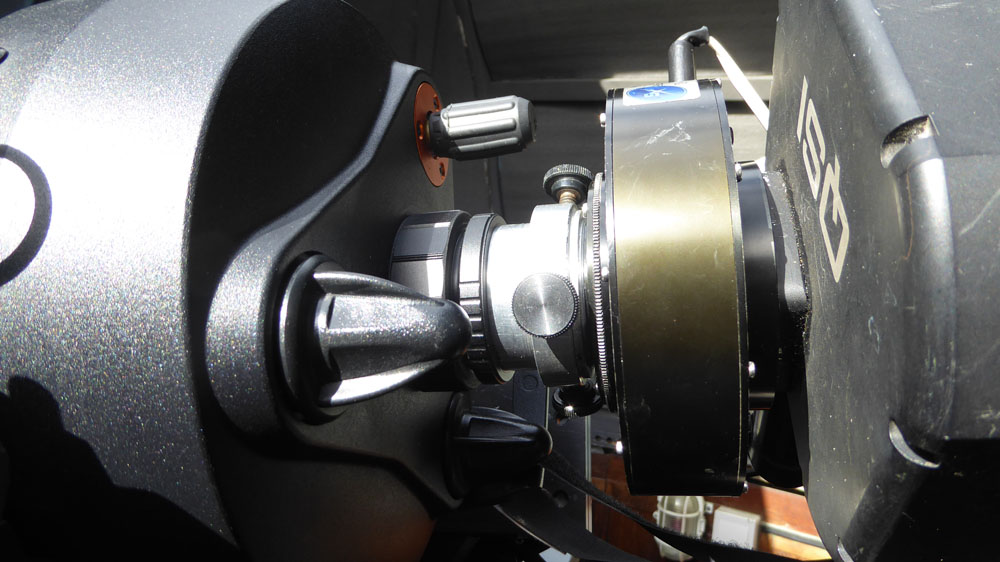
The Edge HD design has an inbuilt field flattener, and requires that for astrophotography the camera is fitted at the correct distance from the telescope. I had a manual camera rotator which I made several years ago, but no longer needed for my other telescopes - they all have rotators built in to the focuser. But the Edge is focused internally, and I thought it would be useful to have the rotator as part of the camera attachment. I had to shorten it somewhat to get the correct distance, but all seemed well on my first light test. I had binned the camera 2x2 for that image, and the stars appeared to be ok. But I next tried it unbinned on an open cluster in a field of Milky Way stars, and it was immediately apparent that something was not right as can be seen in this full size corner crop from a single frame.
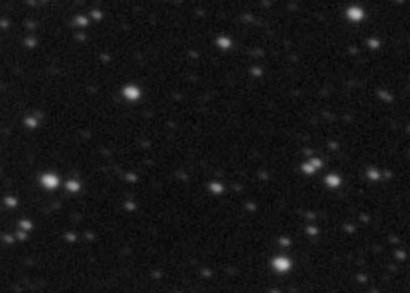
So I re-measured and found I had to shorten the rotator by a further 4 mm. While doing that I also ensured that the assembly was as orthogonal (square on to the telescope) as possible. I again tested it on the same target, open cluster NGC 7039 in Cygnus, and this time all was well. Here are full size corner crops:
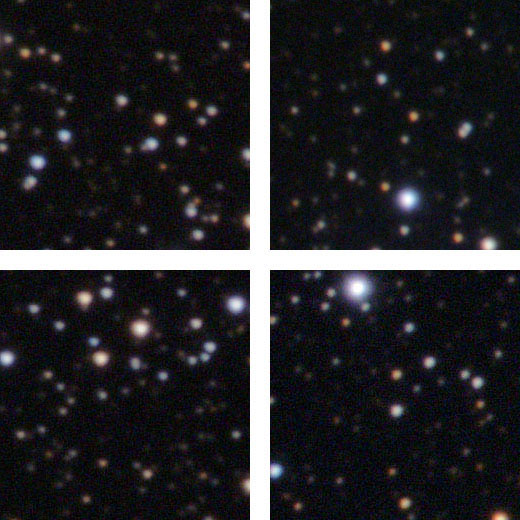
Round stars right into the corners. Most satisfactory! The image and details are here in my QSI section.
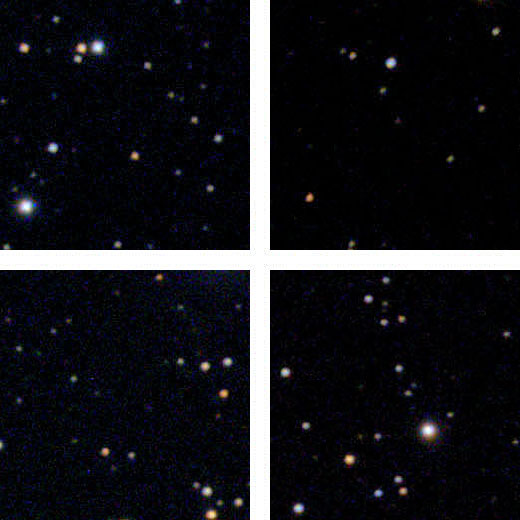
Added later. Although at the time I was happy with the above, I still had a nagging doubt regarding the crispness of the stars when comparing this image with some from my RC10. So did further work on the telescope in May 2026. I found that the collimation was slightly out, and eventually managed to image the open cluster NGC 6939, with satisfactory results. Here are the full size (unbinned) corner crops. Although there is slight ovality towards the top right corner, possibly a very small amont of tilt in the system, in general as can be seen from the full size image here, almost all of the image has beautifully round crisp stars. Indeed if the image had been binned 2x2 as I usually do at this 2000 mm focal length, the ovality would be negligible.