Deep Sky (QSI 683wsg), 2026

2025

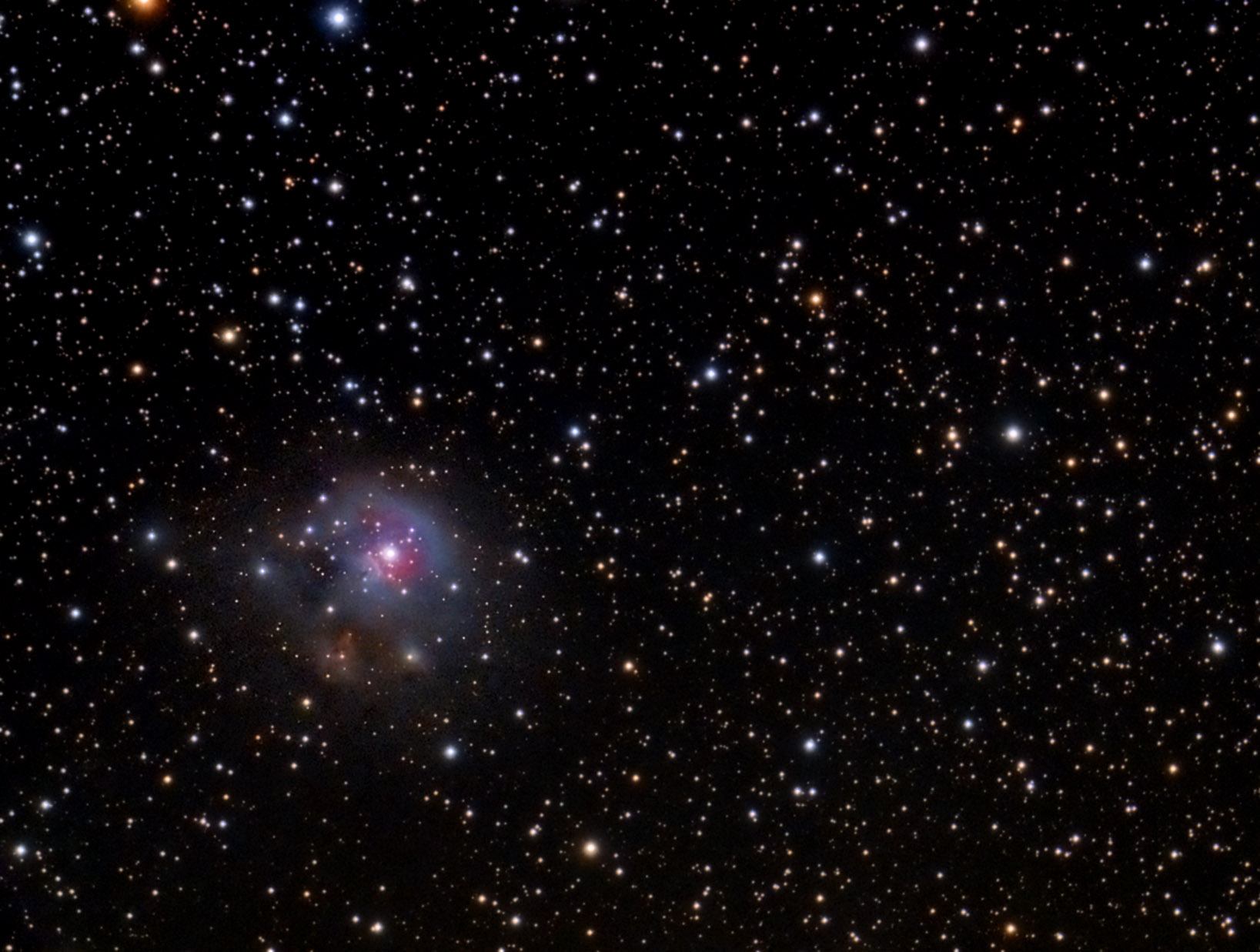
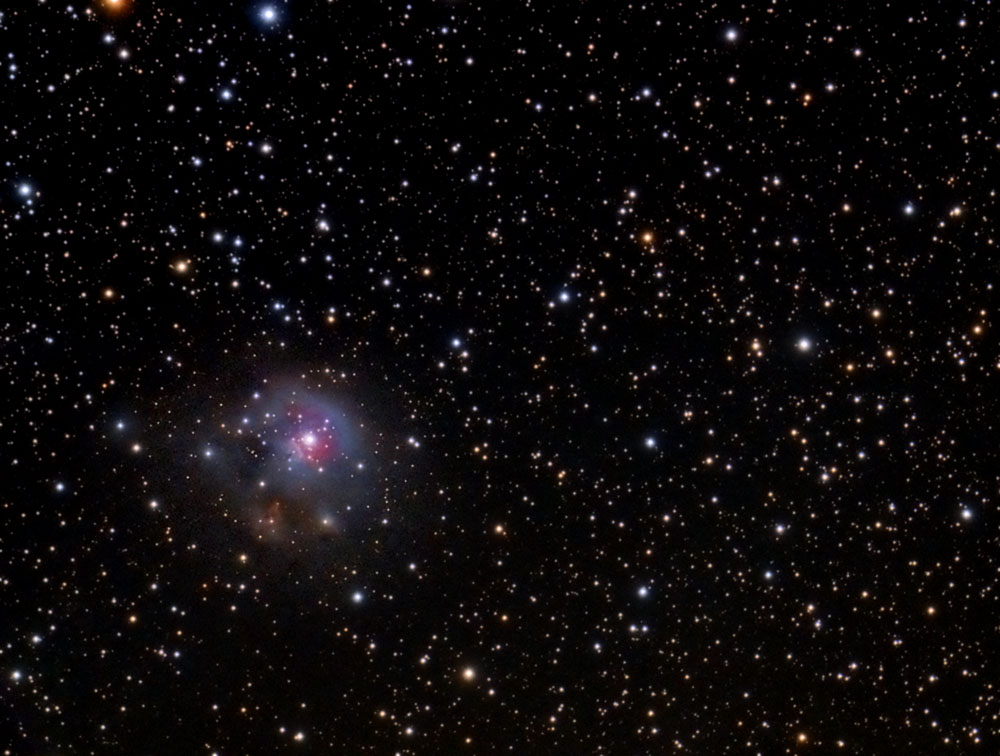
Early January 2026 experienced generally poor weather during the earlier (mainly moonlit) nights, although some worthwhile Jupiter and Solar images were captured. But it wasn't until mid January that I was able to go for a deep sky target. NGC 2282 is a prettily coloured but faint bright nebula in Monoceros. I first saw it in an image by Adam Block. Well of course my 8" aperture in the North East UK is no match for his 32" at 9000 ft. in Arizona. But always worth a try! QSI 683 with SX AO unit on Celestron 8" Edge HD. Luminance 18 x 10 minutes, RGB each 6 X 10 mins. Captured over two nights, most of it on 15th January 2026, total imaging time limited by other commitments. All binned 2x2. Off centre due to the location of the off-axis guide star. I thought about cropping it, but it's quite a nice star field, so it's all there.
Full size

This winter (2025-26) has seen one of the worst deep sky seasons yet, with very few clear skies during periods of full darkness. I was away at Kelling Heath Star Party in late March but unfortunately experienced some equipment problems - poor guiding, possibly down to very bad seeing and dewing up (forgot to connect the dew heater on a very high humidity night - oops!).

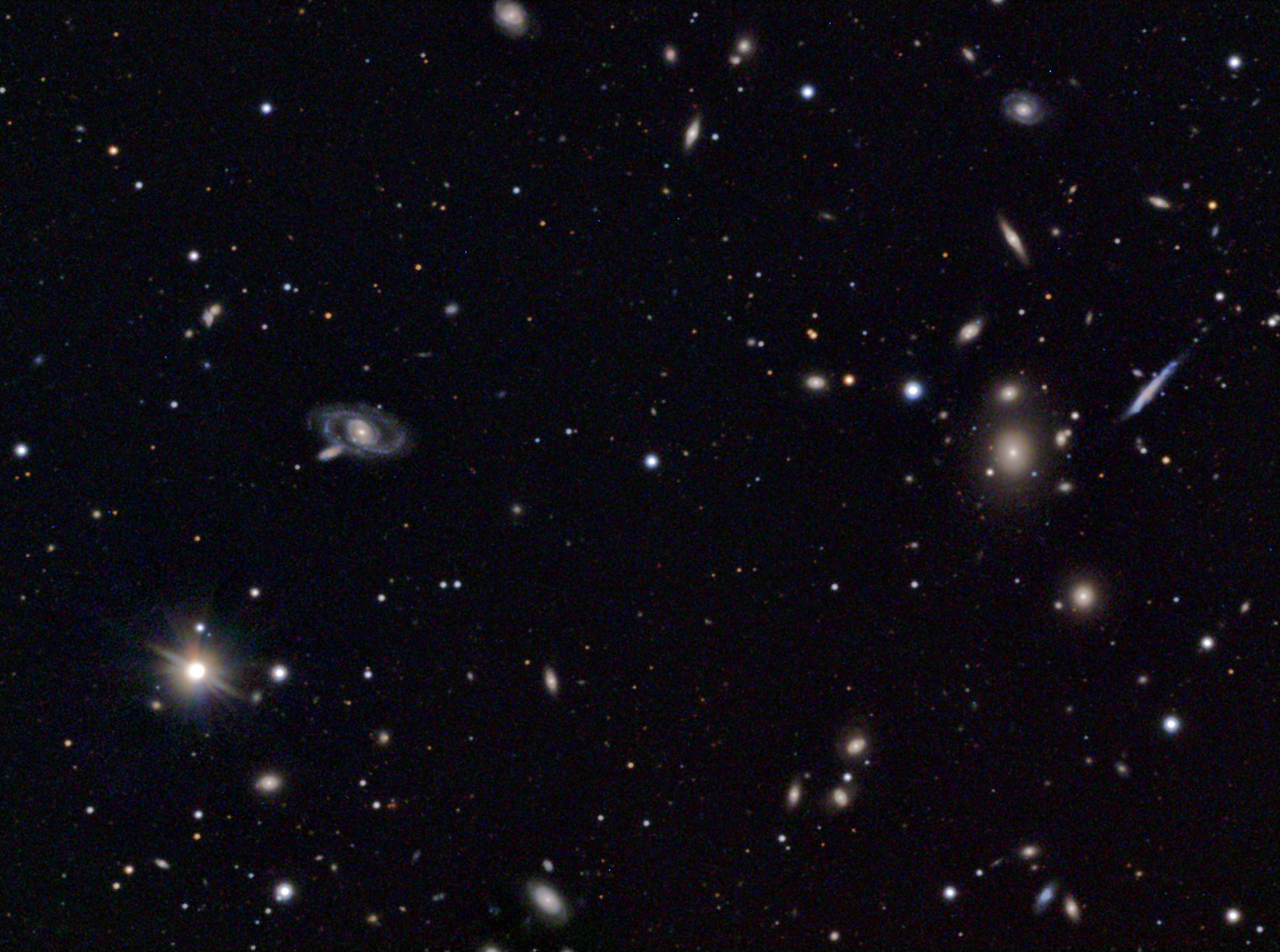
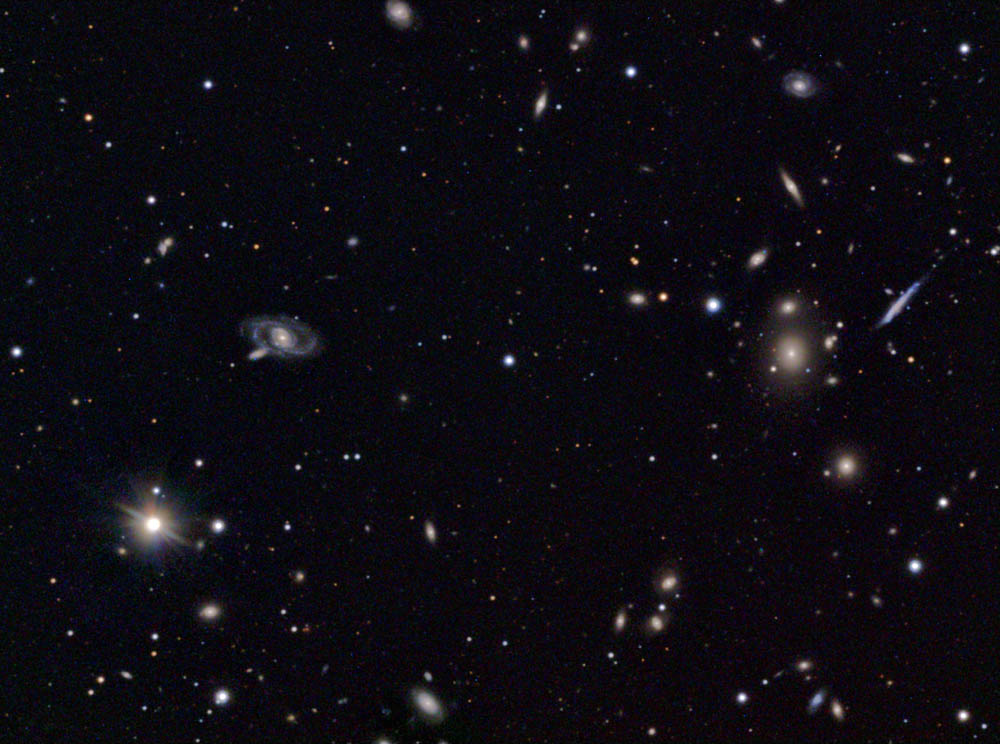
Anyway following my return, there were two good dark nights on 5th and 6th April. Full dark times now dwindling, but I was able to obtain several hours of data over the two nights. This target is the central area of the galaxy cluster Abell 1367 in Leo. Numerous small galaxies, of particular interest is the group to the right, the brightest of them being NGC 3841 (mag 11.8). The larger spiral galaxy above the bright star (mag 7.54 SAO 81972) is NGC 3861 (mag 12.7). Numerous other galaxies with magnitudes down to 16 and fainter. QSI683 with SX AO unit on Celestron 8" Edge HD. Luminance 15 x 10 minutes, RGB each 6 x 10 minutes.

Full size