|
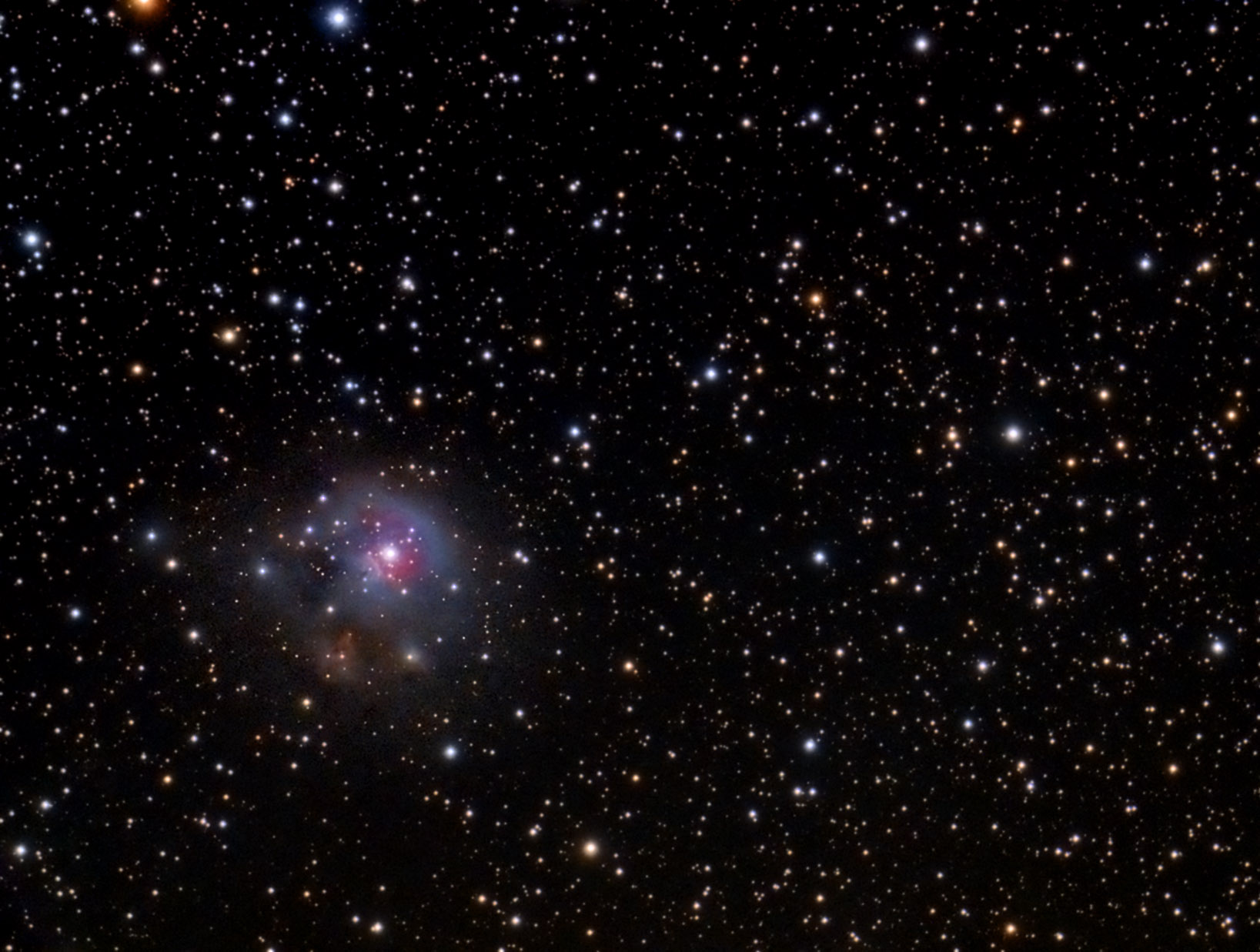
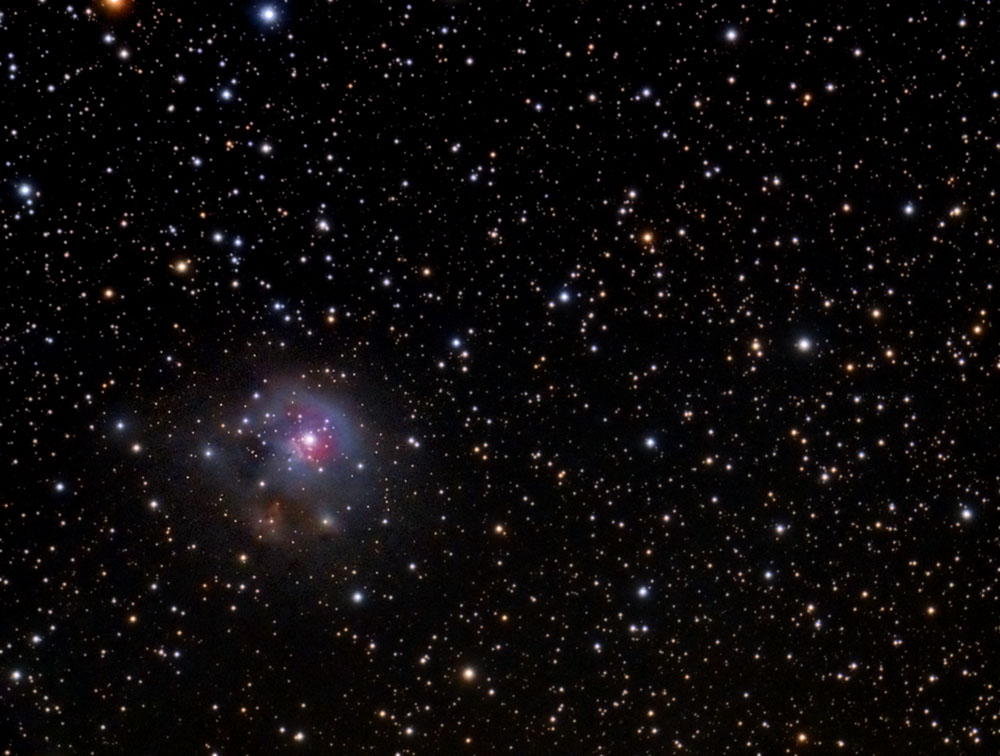
Early January 2026 experienced generally poor weather during the earlier (mainly moonlit) nights, although some worthwhile Jupiter and Solar images were captured. But it wasn't until mid January that I was able to go for a deep sky target. NGC 2282 is a prettily coloured but faint bright nebula in Monoceros. I first saw it in an image by Adam Block. Well of course my 8" aperture in the North East UK is no match for his 32" at 9000 ft. in Arizona. But always worth a try! QSI 683 with SX AO unit on Celestron 8" Edge HD. Luminance 18 x 10 minutes, RGB each 6 X 10 mins. Captured over two nights, most of it on 15th January 2026, total imaging time limited by other commitments. All binned 2x2. Off centre due to the location of the off-axis guide star. I thought about cropping it, but it's quite a nice star field, so it's all there. |
![]() |
|
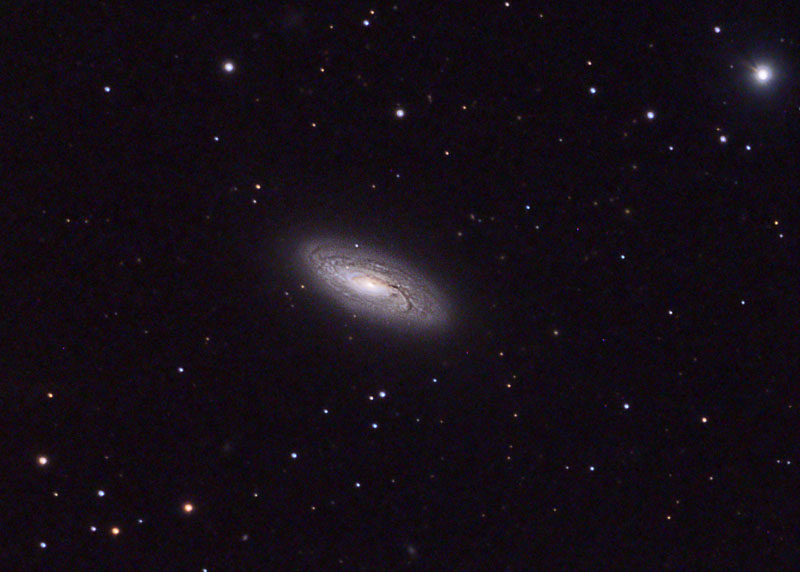
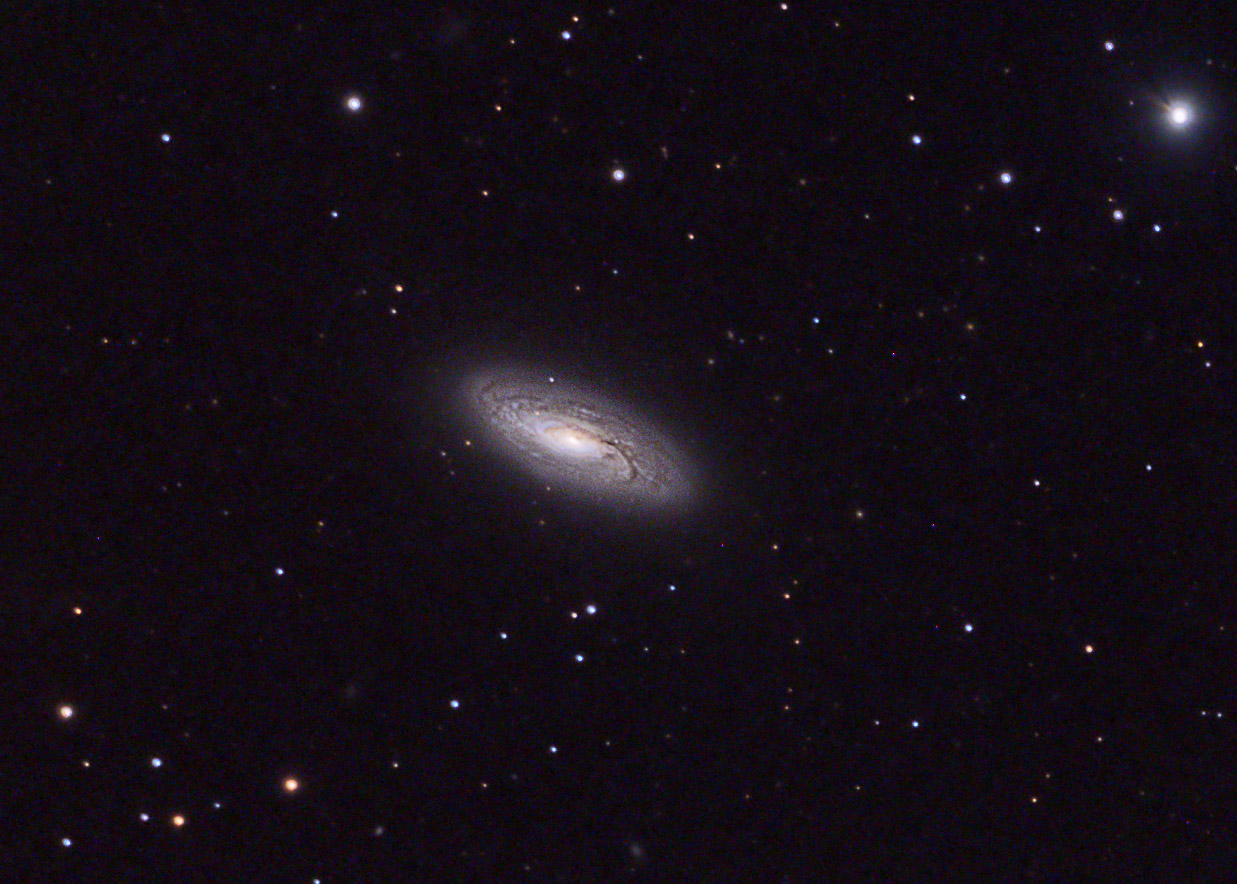
There are a couple of interesting galaxies about 3 degrees East of Cor Caroli. I imaged NGC 5033 in 2009, (it's much the same distance away from us, although not close enough to noticeably interact with NGC 5005), but just rediscovered NGC 5005, and with clear sky forecast had to go for it on 9th May 2026 although only Astronomical twilight for me. Very interesting dust lane. Image cropped a bit. Late starting (concert performance), but got just enough data. QSI 683 on Celestron 8" Edge HD. Luminance 13 x 5 minutes, RGB each 5 x 5 minutes, all binned 2x2. |
![]() |
|
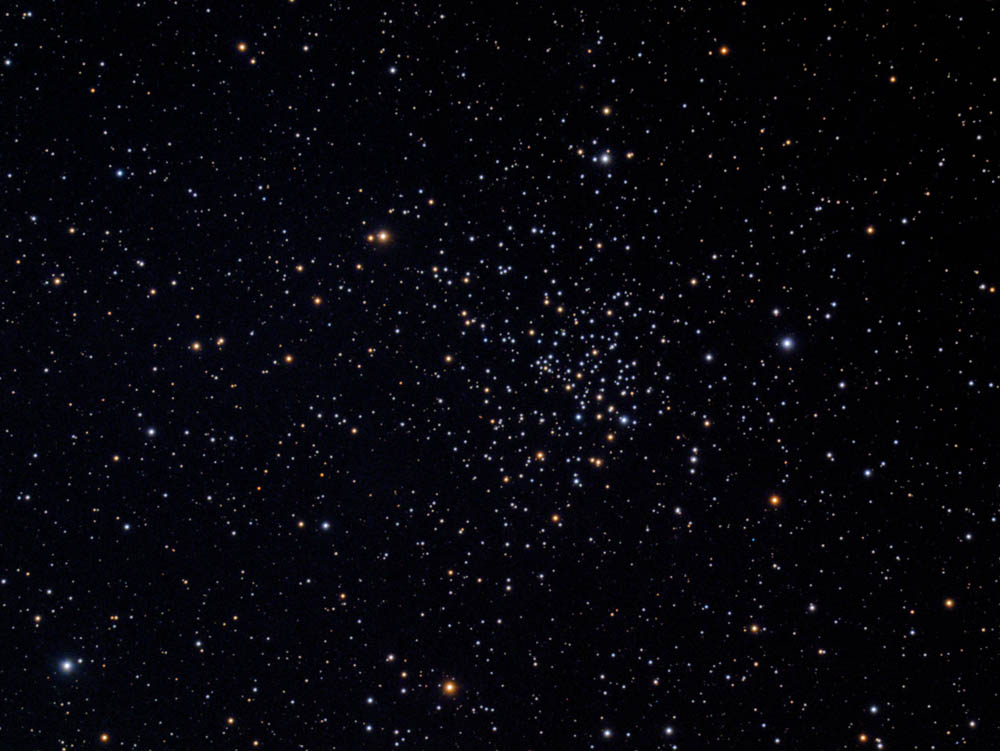
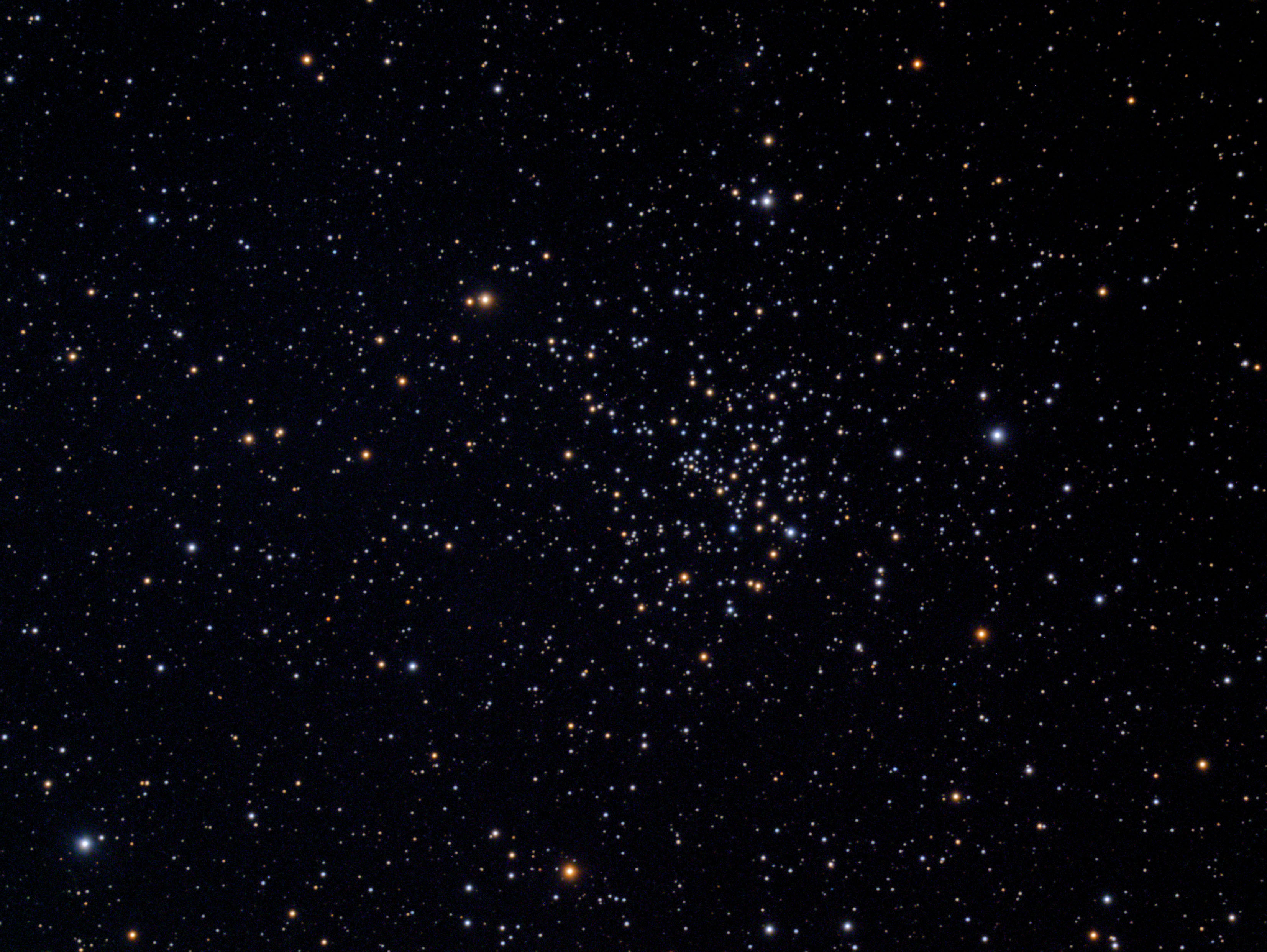
The 2025 - 2026 winter season proved disastrous for deep sky imaging. Although I was able to get plenty of Solar images between passing clouds, clear dark nights were in very short supply indeed. Particularly frustrating because I needed to get properly to grips with my new Celestron 8" Edge HD which replaced my beloved RC10 (as I aged it got too heavy for me to safely lift onto my observatory mount). Although when I first set up the C8, I was happy with the performance, I still felt the stars weren't quite as crisp as expected. A brief dark night in early May 2026 gave me the opportunity to check the collimation which proved to be slightly out. Also I had mislaid a part from my home made camera rotator, and the replacement I made was slightly shorter. The original part eventually resurfaced, hopefully fully correcting the required back focus, so I resolved to take an image which I could compare with one from the RC10. The opportunity arose on the night of June 2nd 2026. Despite Astronomical twilight, and a bright Moon later (very low in the South) seeing was good in a clear sky. NGC 6939 was well placed in the Northern sky, and I was able to get 8 luminance and 4 each 5 minute RGB subs. QSI 683 with Starlight Xpress AO unit, all unbinned. (I did also take a single binned 2x2 luminance frame for a proper comparison with the binned RC10 image.) Comparing the two, it was clear that the Edge image did indeed compare well with the RC10 image with tight stars nicely round right into the corners of the image, no doubt partly due to the steady sky conditions, so I am now very happy with the EdgeHD. Phew! |
![]() |